

















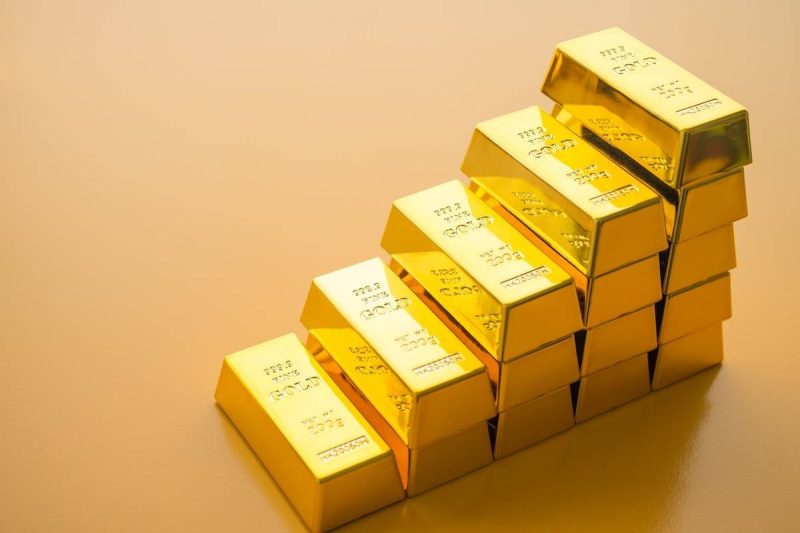
Global gold demand surged past 5,000 tons in 2025 for the first time on record driven by a historic wave of investment inflows and sustained central bank buying, according to the World Gold Council’s (WGC) latest Gold Demand Trends report.
Total gold demand, including over-the-counter transactions, exceeded the 5,000-ton threshold as investors, institutions, and official buyers responded to geopolitical risk, falling real rates, and growing uncertainty across bond and equity markets.
Combined with a year of relentless price gains, the surge pushed the total value of global gold demand to a record US$555 billion, up 45 percent year-on-year.
Consequently, gold prices themselves rewrote the record books. The LBMA PM gold price set 53 new all-time highs during 2025, with the average price in the fourth quarter climbing to US$4,135 per ounce, up 55 percent from a year earlier.
Investment demand dominates, central banks remain a critical anchor
The WGC reported that investment demand was the primary driver of growth, accounting for the bulk of incremental buying during the year.
Global gold exchange-traded funds recorded net inflows of 801 tons in 2025, the second-strongest annual increase on record, which reversed years of subdued ETF participation.
At the same time, bar and coin demand accelerated sharply. Demand rose to a 12-year high as retail and high-net-worth investors sought safe-haven exposure in the midst of persistent geopolitical tensions and uncertainty around monetary policy trajectories.
That momentum carried into the final months of the year. Total fourth-quarter gold demand reached 1,303 tons, the highest ever recorded for a fourth quarter, further supported by ETF inflows of 175 tons and bar and coin buying of 420 tons.
Meanwhile, central banks continued to provide a firm foundation for demand even as purchases eased modestly from the extraordinary levels of recent years.
According to the report, net official-sector buying reached 863 tons in 2025, remaining historically elevated but below the more than 1,000 tons added in each of the previous three years. In the fourth quarter, buying accelerated with central banks purchasing 230 tons, up 6 percent quarter-on-quarter.
For instance, the National Bank of Poland emerged as the largest buyer for the second consecutive year, adding 102 tons in 2025 and lifting its gold reserves to 550 tons. Gold now accounts for 28 percent of Poland’s total reserves, approaching its revised 30 percent allocation target.
In January, the bank’s governor signaled an intention to increase reserves further to 700 tons, citing national security considerations.
Supply growth muted, technology demand holds steady
On the supply side, the response to soaring prices remained unexpectedly subdued. Total gold supply rose just 1 percent year-on-year to 5,002 tons, the highest level in the WGC’s annual data series dating back to 1970.
Mine production inched up to an estimated 3,672 tons, potentially setting a new record, while recycling increased only 3 percent to 1,404 tons. This was a muted reaction given the 67 percent rise in the US-dollar gold price.
The council explained the weak recycling response reflected the absence of economic distress, expectations of further price appreciation, and structural behaviours in key markets. This included the use of gold as collateral and the prevalence of trade-in transactions rather than outright selling.
Meanwhile, gold demand in the technology sector remained broadly stable at 323 tons for the year, supported by continued growth in artificial-intelligence-related applications.
The AI boom increased demand for high-speed computing and data-center infrastructure. However, the report also noted that rising gold prices continued to push manufacturers toward thrifting, substitution, and research into alternative materials.
From a commodity to a strategic asset
Overall, 2025 marked an evolution of how industry stakeholders view the metal in relation to changing market dynamics.
Randy Smallwood, president and chief executive officer of Wheaton Precious Metals (TSX:WPM,NYSE:WPM) said investors are increasingly recognising gold as a monetary asset rather than a cyclical commodity.
“For the last 40 years, we’ve thought of gold as a commodity,” Smallwood said. “We forgot that it’s a currency, and it is a currency,” said Randy Smallwood, president and chief executive officer of Wheaton Precious Metals, in a fireside chat at the Vancouver Resource Investment Conference (VRIC).
“The mining industry doesn’t have an impact on pricing. Doesn’t have an impact on value. It is a currency. It has been a currency for thousands of years,” he added, further noting that new mine supply adds only less than 2 percent annually to the total stock of gold held globally
Smallwood, as well as the council, expects many of the forces that drove 2025’s record demand to remain in place.
“We still see continued strength and appetite for swapping out US dollars, treasuries, whatever you want to call it, any exposure towards gold,” he said. “And that’s not going away.”
Securities Disclosure: I, Giann Liguid, hold no direct investment interest in any company mentioned in this article.